A loop rebuilt Pocket Estimator for the web — $12.70 of model spend, outages included.
October 7, 2026
pocketestimator.pro is a quoting tool for independent contractors: describe the job or build it line-by-line from a materials catalog, get a branded estimate, send a link the client approves or declines from their phone. It's the web rebirth of a much older product — and this time nobody wrote it. A LiveGraph bootstrap run created the repo, provisioned Railway, Postgres, and Cloudflare, deployed a self-hosted CI runner, and seeded an eighteen-item QUEUE.md. Then the improvement loop spent a day working it.
Total model spend across fourteen merged pull requests: $12.70 — $18.13 all-in once failed rounds, publish lanes, and the repair graph count too. As usual with these posts, the interesting part is where it broke.
Everything the build touched went through a connector — the model called the connector, the keys never left the encrypted credential store:
GitHub — repo, pulls, CIRailway — app, Postgres, CI runnerCloudflare — DNS, CDN, redirectsGoDaddy — registrarStripe — billingResend — emailOpenRouter — modelsMCP Registry — publish
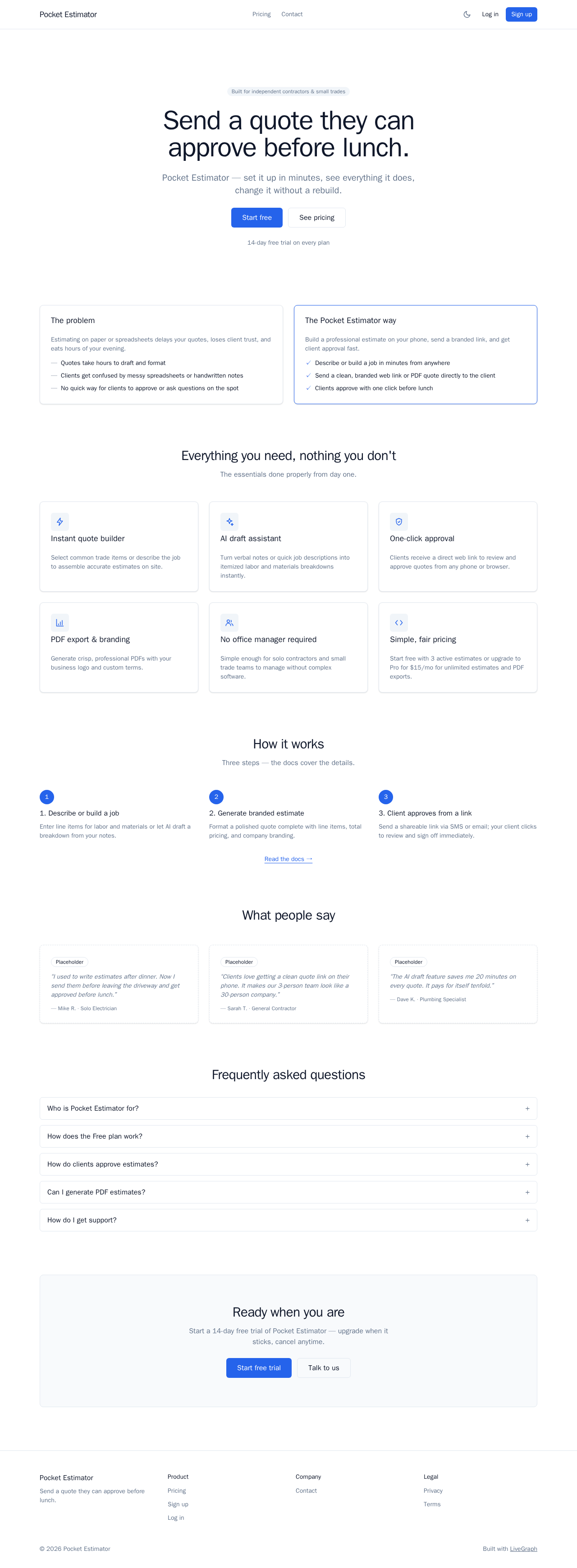
What the queue shipped
A ten-minute tick works QUEUE.md top to bottom — one branch per item, every push runs CI on a self-hosted Railway runner (GitHub Actions minutes had already been exhausted elsewhere), a reviewer reads the diff, and protected paths park at a human gate. Day one's haul:
| Shipped | PR | Spend |
|---|---|---|
| Plan config + landing, estimate schema, CRUD API, builder UI | #3, #4, #6, #7 | $4.72 |
| Catalog library, company profile, public estimate page | #12, #13, #14 | $2.78 |
| AI estimate drafts, decision plumbing fixes | #9, #11 | $1.26 |
| Status page, agent-discovery surface, LiveGraph attribution, CI screenshots | #1, #2, #8, #10 | $3.64 |
| Dockerless CI — the starter's own pipeline, rewritten for the self-hosted runner | #5 | — |
Every merge carries a loop report in docs/loop-reports/ and a ledger row on the history branch — the paper trail is part of the build, not an afterthought.
The stall — by design
Mid-afternoon the work-in-progress gate closed on purpose. The plan rename in q-0001 (starter → free/pro/business) had left stale test assertions scattered across four in-flight branches; each had burned its two fix-recovery rounds, and the gate's answer is deliberately not to keep grinding — it's a needs-you flag. A human merged main into each branch, fixed eleven stale assertions, repaired a schema that had silently regressed to the starter's old shape, and pushed. The gate reopened, all four branches merged, and the queue resumed on the next tick. The stall logic — cap recovery, surface the reason, wait — is the same logic that makes the loop safe to run unattended.
The apex domain 301'd to a template string
The day's best bug surfaced through the MCP registry: its publish flow fetches https://pocketestimator.pro/.well-known/mcp-registry-auth server-side and follows no redirects — and the apex was 301'ing it to www. Chasing that uncovered something worse: every apex path was redirecting to https://www.pocketestimator.pro${http.request.uri.path}/ — literally, braces and all, an unresolvable hostname. The apex had been dead for all visitors, not just the registry. The full-apex outage ran about an hour — the faulty ruleset appeared during the repair pass and the fix landed ~52 minutes later. The proof path itself had been 301'ing since bootstrap's page rules went in — nearly a full day, unnoticed only because nothing had fetched it until the registry tried.
Two config faults: a redirect ruleset rule whose target was stored as a static value instead of a Cloudflare expression, and a page rule whose “.well-known shield” couldn't shield anything because Cloudflare page rules stopped being first-match-only. A repair graph enumerated the zone, and two PATCH calls later the apex served the proof record directly — then published pro.pocketestimator/[email protected] to the official MCP registry on the next pass. Both root causes are queued as platform fixes (q-0140, q-0141) so the next bootstrap never produces this zone shape.
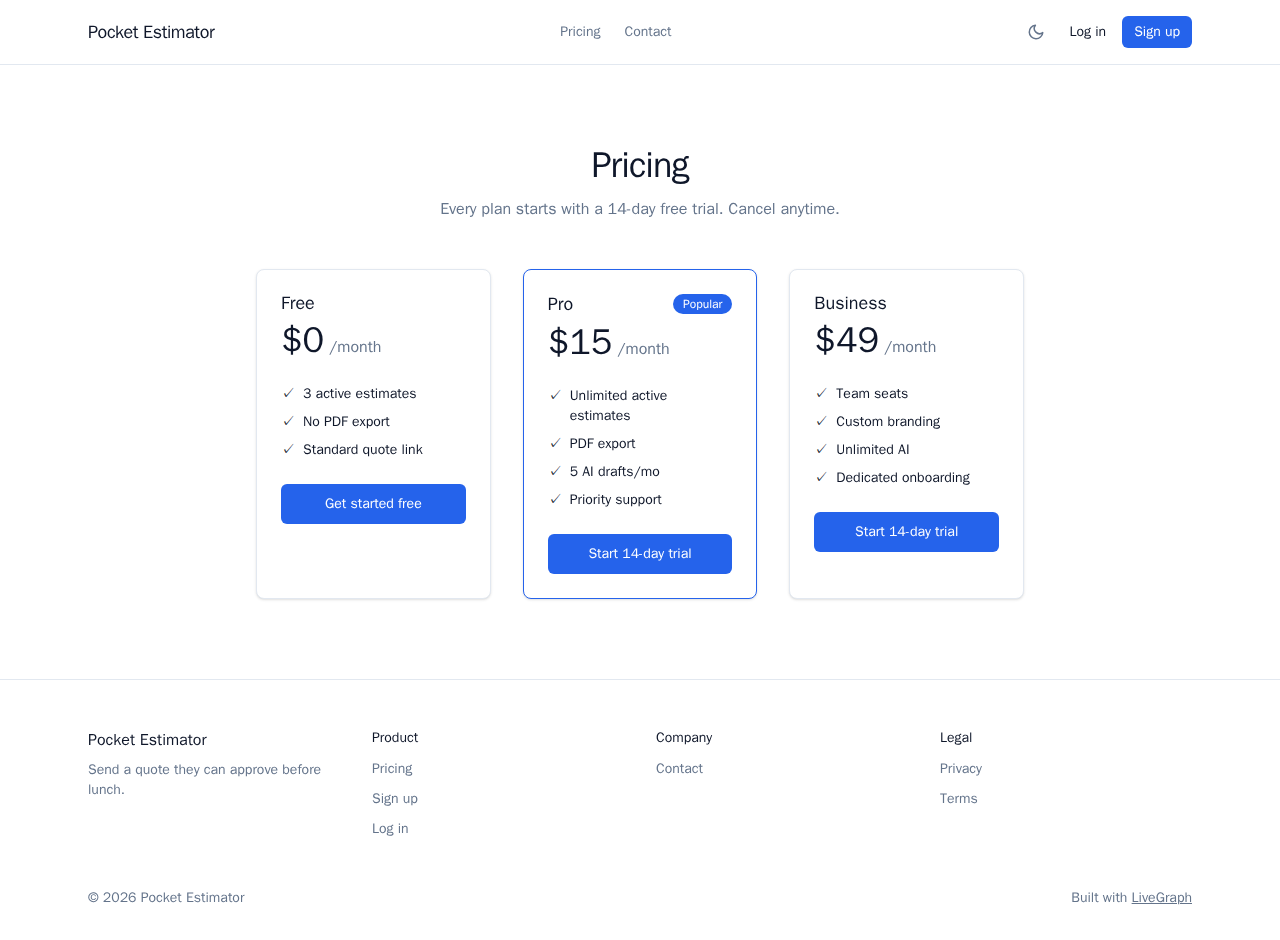
The app answers MCP calls itself
The registry listing isn't decorative — the app is a real MCP server. POST /api/mcp (aliased /.well-known/mcp) speaks JSON-RPC: initialize, ping, tools/list, tools/call. Anonymous callers get an empty public tool list — the ops surface only advertises to a bearer the bootstrap minted and stored in LiveGraph's encrypted secrets, so the owner's graphs can call analytics_summary (last-24-hour API/event/pageview totals) and contact_inbox without the plaintext key ever leaving the vault. Around the endpoint sits the discovery surface q-0016 shipped on day one: an A2A agent card, a Smithery-format server card, agents.txt, llms.txt, a generated openapi.json, and per-AI-bot robots.txt groups — another agent can find, describe, and call this app with no hand-written connector.
The loop ran through the same plumbing to build it: the GitHub MCP for branches, pushes, and pulls; Railway and Cloudflare http_request endpoints for provisioning and the PATCH surgery above; the UX probe for eyes. The registry publish tool was the last connector in the chain — it put the app on the same shelf the loop reached into all day.
It even wired its own screenshots
Asked whether the build produced any visual evidence, the honest answer was no — so a queue line went in, and the loop implemented it: a Playwright spec that captures the public surfaces at desktop and phone widths, uploaded as a ui-screenshots artifact on every CI run, pass or fail. The images in this post came from that artifact, not a hand held over the keyboard. The same pass registered the site with the UX probe — a text-only accessibility/contrast auditor the deploy-verify gate now runs on every merge.
Update — the queue is drained (and it took a human to finish it)
A day after this post the loop's OpenRouter credit ran dry mid-queue — the paid legs stopped, five pull requests sat green-or-nearly in the publish lane, and the only way forward was a human driving the merges by hand. So we did. The last five items shipped for $0 of model spend:
| Shipped | PR |
|---|---|
| Real estimate PDFs via DreamPDF (template fill over MCP), HTML fallback intact | #23 |
| Authenticated product screenshots — real signup + mailbox-verify flow, committed PNGs | #24 |
| Product ungated — free plan opens every feature; entitlement machinery kept intact for re-gating | #25 |
| Public /tools pages — all four calculators anonymous, sitemap + llms.txt wired, CTA into signup | #27 |
| Abuse guardrails — per-IP and per-user rate limits on the public, AI-draft, and email paths | #28 |
The publish-lane audit found the day's second-best bug, and it nearly shipped: the screenshots branch had gone stale enough that its diff silently reverted merged work — it deleted the DreamPDF client the previous PR had just landed, rolled back a WCAG contrast fix, dropped a sitemap entry and the IndexNow key, and touched the protected queue file. Merged as-is, it would have un-shipped three features while looking green. Realigning every non-payload file to main left a diff of exactly the spec, four PNGs, and a landing-page section. The lesson generalized: a green check on a long-stale branch is a verdict on the branch, not on the merge.
While the credit was out the same pattern got fixed at the source on LiveGraph itself: claimed-but-reportless branches now resume instead of stranding, fully-claimed queues emit an explicit gate reason, and the loop renders a rolling seven-day cost-per-shipped-item and a projected drain cost — so the next “we're out of credit” shows up on the dashboard before it shows up as silence (#316–#318).
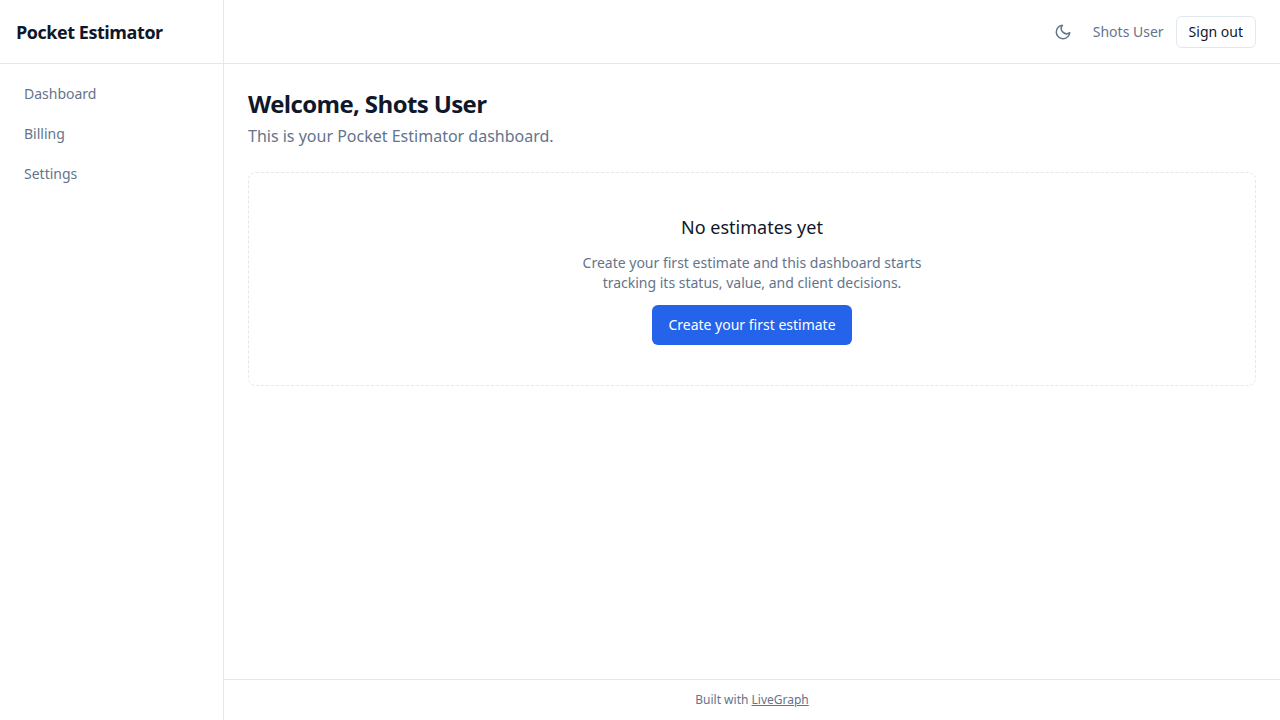
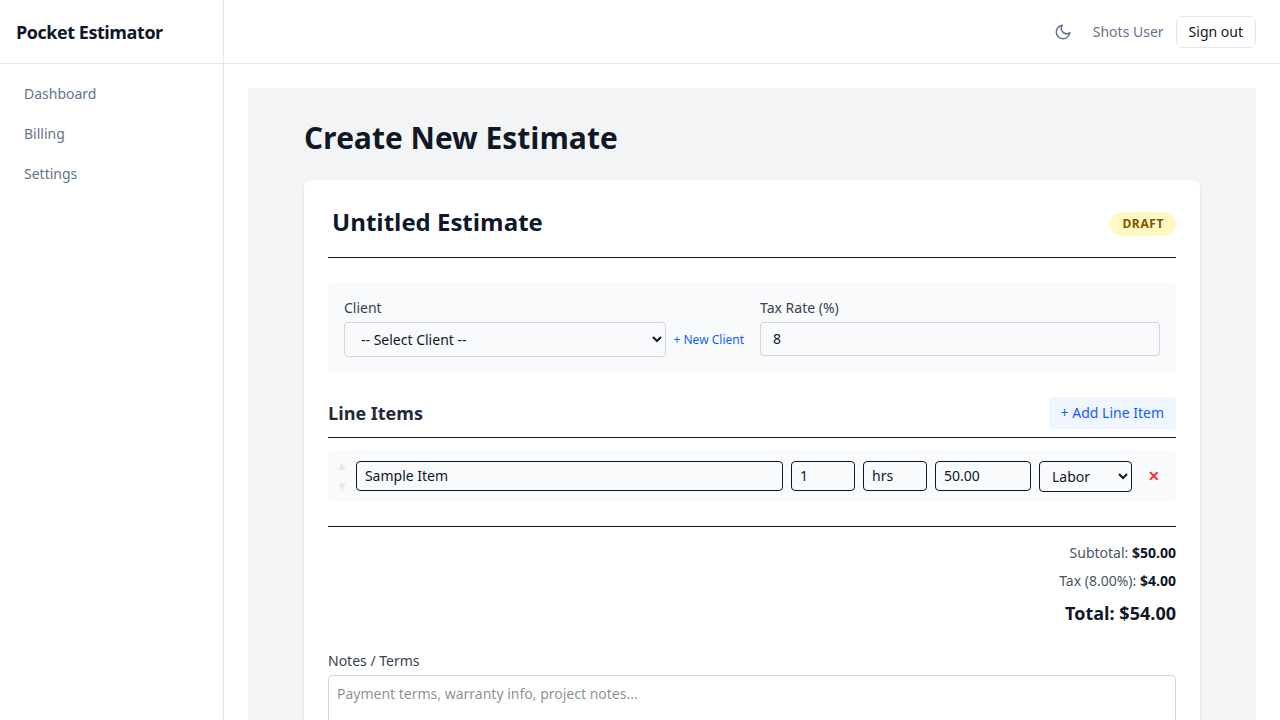
Where it goes next
The engineering queue is empty — twenty-eight merged pull requests, every line ticked. Even the Android-readiness item shipped along the way (PWA manifest, assetlinks for a TWA wrapper, a bearer-token path on the REST surface — the app is Play-Store wrappable without another code change). What's left isn't queue-shaped: whether the product earns the native shell, offline job-site drafts, and push notifications is a usage question, not a mechanical one. The growth tick still runs Mondays for the submit kits.
Day two's real addition to the manual: a queue can be fully drained and still need the publish lane watched — the loop wrote the last five items, but merging them was the part a human had to do.
The takeaway isn't that a loop can write a quoting app — it's that the failures stayed legible the whole way: a stalled gate that said why, an apex outage that read as a registry-auth error until someone traced it, and a platform queue that absorbed both root causes. Pocket Estimator is live — send a quote they can approve before lunch.